






Supporting manufacturers with machine building & integration
Enterprise Capability. Direct-Team Delivery.
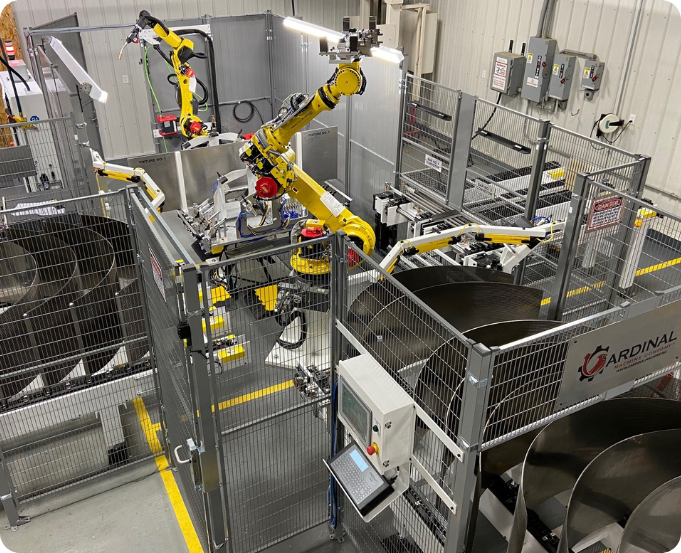
Cardinal Machine Company designs and builds special machines, tooling, fixtures, and factory automation systems supporting everything from stand-alone stations to complete automation lines and systems integration. When execution matters, we keep ownership tight, decisions fast, and deliverables clear.

New to automation? Learn how we help first-time automation teams here.
From First-Time Buyers to Seasoned Integrators
Trusted by Manufacturers of All Sizes
From regional manufacturers to major OEM teams, Cardinal is brought in when the expectation is simple: build it right, prove it in buyoff, and support it after it hits the floor.
Built for large-program expectations
A right-fit machine builder for demanding expectations and complex builds
Since 1972, Cardinal has supported manufacturers with machine-building and systems-integration work that demands discipline, responsiveness, and accountability. You get a consistent team, direct access to decision makers, and a delivery approach designed to reduce friction—not add layers. From our facility in Clio, Michigan, we support projects through engineering, build, and runoff/buyoff, and coordinate shipping, installation, and commissioning as needed.
.png)
Integration You Can Trust
We are Authorized System Integrators and Partners
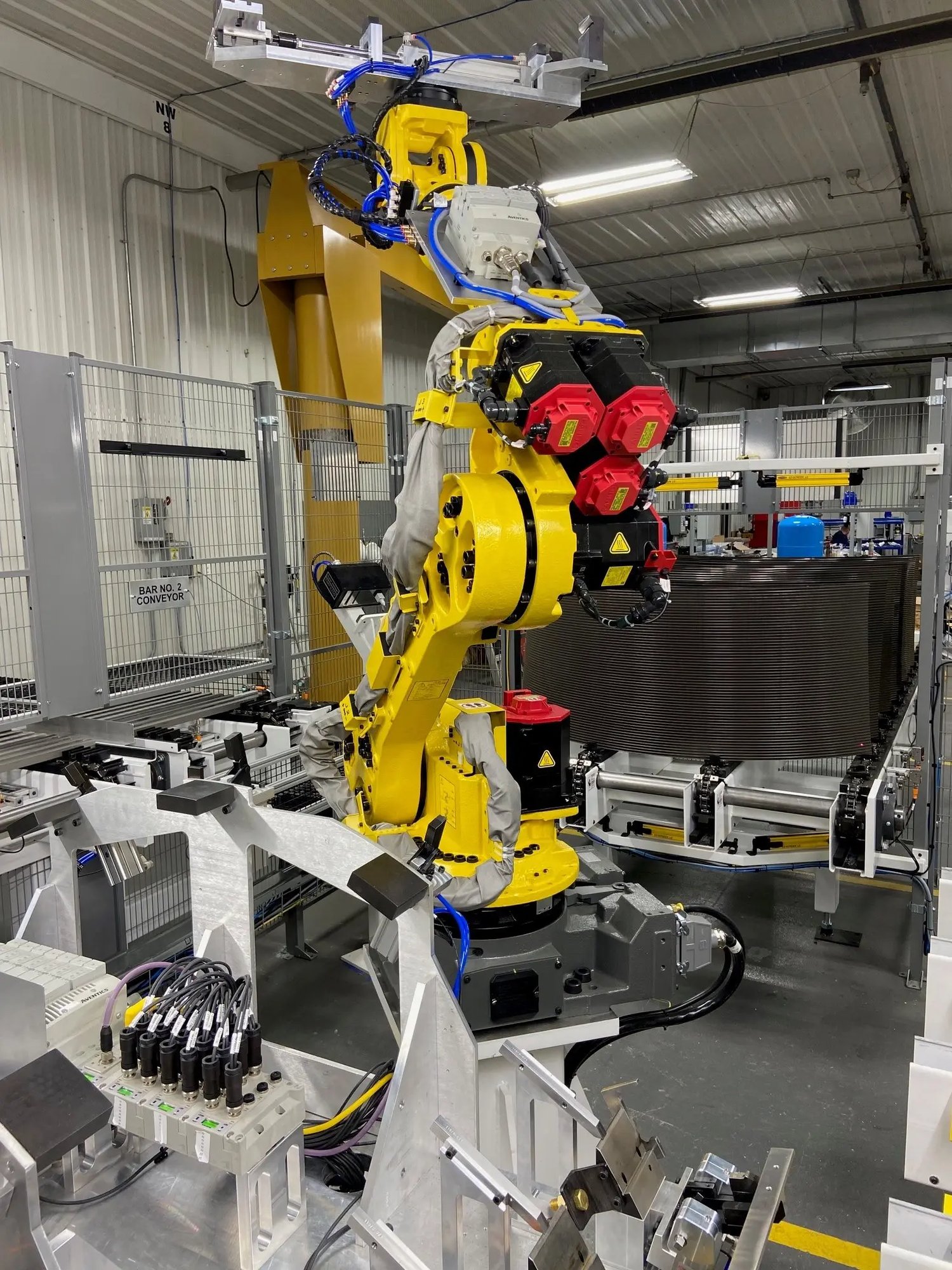
Cardinal is a FANUC Authorized System Integrator, which means we’ve been vetted by FANUC for technical capability, project experience, and support quality. You’re not just working with “a shop that uses FANUC robots,” you’re working with a partner recognized inside FANUC’s own network as qualified to design, integrate, and support their platforms.
As a Flexiv robotics system integrator, Cardinal also has full access to the Rizon 4, Rizon 4s, Rizon 10 robotic arms, and the Moonlight parallel robot. These can be integrated into existing production lines or deployed in stand-alone cells, giving your team more options when you’re tackling complex applications.
In-House Expertise That Keeps Projects Moving
End-to-End Support Capabilities
Cardinal has the in-house capability to engineer, fabricate, integrate, and support the full system, bringing the supporting capabilities that keep projects moving and reduce handoffs with:
Design Optimization
We optimize machine design for size, uptime, and reliability.
Robotic Machines
We have decades of robotics application and integration experience.
Welding Machines
Decades of experience optimizing various welding applications.
Tooling Integration
We bring all your various systems together seamlessly so you don't have to worry.
Spare Parts & Support
CMC call-out parts, build-to-print parts, and ready-to-install subassemblies
CNC Machining
Multi-axis capabilities for complex geometries and tight tolerances.
CAD Systems
We utilize CAD/CAM to turn 3D models into shop-ready manufacturing.
3D Design
Utilizing 3D design 100% of the time for 20+ years in automation projects.
Fewer handoffs. Faster decisions. Clear ownership.
Work With a team that cares about your company's success
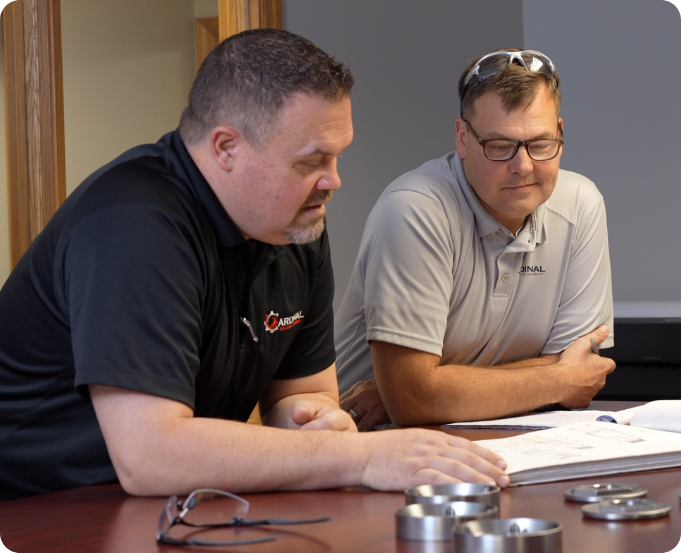
Large manufacturers often prefer a right-fit machine builder for one reason: the work moves faster when the same accountable people stay involved. Cardinal reduces friction by keeping your project close to the engineers and leaders responsible for the outcome, so you’re not re-explaining requirements at every handoff or waiting on decisions to move through layers.
.png?width=2000&height=162&name=Cardinal%20Download%20Assets%20(1).png)
Ready to qualify a build partner?
Discover Why Cardinal Machine Company is The Right builder for you
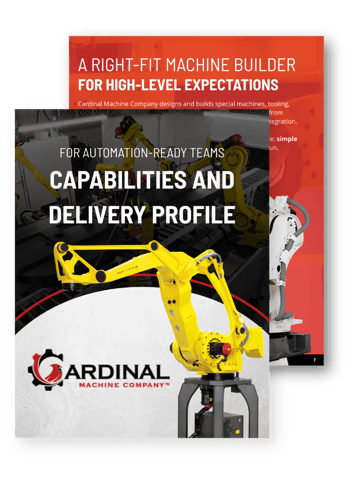
Get a concise snapshot that covers Cardinal’s core capabilities, supporting in-house resources, and the delivery model that keeps ownership clear. It’s designed to help engineering, operations, and leadership confirm fit, understand how projects will be executed, and see how partner platforms can align with your standards.

Cardinal provides a Detailed Order Quote
Budget Against Reality, Not Best-Case Assumptions
When the front end is loose, the quote is always an estimate, no matter how polished it looks. Cardinal works with your team to define the critical scope elements up front: what’s included, what’s assumed, what interfaces matter, and what the system must prove at buyoff. The goal is alignment before momentum turns into rework.
Cardinal provides a complete order quote that isn’t guesswork dressed up as precision. Pricing is tied to what’s been defined and agreed, with assumptions and exclusions visible—not buried. The result is a more traceable quote, fewer surprises, and fewer change orders caused by a scope that wasn’t clearly established from the start.


Know What Happens After You Say “Yes”
Capital Build Output
Once capital is approved, you need execution that actually follows the design, scope, and acceptance criteria you agreed on up front. Clear expectations for FAT/SAT, run-at-rate, and handoff keep the launch from becoming a moving target and make performance on the floor something you can measure, not debate.
Cardinal engineers assemble and debug against the documented design package and acceptance plan, then run a structured buy-off so everyone can see how the system performs before it hits your floor. After installation, we stay engaged through support, training, and as-built documentation, so your team isn’t left supporting an unfamiliar system, and the equipment runs as intended in real production.
Same Level of Expertise. Better Experience
What It’s Like Working With Cardinal Machine
Immediate response to All of your important questions
You can talk directly with engineers.
Clear, plain-language communication
Stay informed about trade-offs, risks, and options.
Consistently work with a single, accountable partner
One source guiding you from concept to install.
Faster turnaround with project completion
Because important decisions aren’t lost in layers.
Have a Project in Mind?
Book a Strategy Call With Cardinal's VP of Operations
If you’re evaluating concepts, scoping an RFQ, or trying to sort out where the risk really sits, a quick conversation can be more useful than another slide deck. Schedule time with Jeremy, Cardinal’s VP of Operations, to walk through your project, compare perspectives, and see how our front-end approach could support your team.

Frequently Asked Questions
Got Questions? We Got Answers
Whether you’re scoping a new cell, updating an existing line, or pressure-testing an idea, a few questions always rise to the top. If you don’t see what you’re looking for, just let us know; we’re happy to dig into your particular situation.
How is Cardinal’s front end actually different from what most integrators do?
Most projects jump from a rough idea to a quote, leaving many assumptions untested. Cardinal separates and formalizes the early work into distinct stages: a structured concept + budget step, a defined collaborative design engagement using real and worst-case parts, then a detailed order quote that’s the output of that work.
That means scope, layout, major components, and acceptance criteria are all clarified before the build.
Is this process only for large systems, or does it work for smaller projects too?
The same front-end structure applies whether you’re looking at a single cell, a group of stations, or a larger line. Concept + budget helps you decide if the opportunity is worth pursuing; collaborative design uses real parts and constraints to shape a buildable solution; the detailed quote and capital build then follow that work.
The scale of the system changes, but the need for clarity, evidence, and explicit assumptions remains the same.
How do you reduce change orders during the build?
Change orders usually come from scope ambiguity. We reduce churn by making assumptions explicit early, documenting what’s included vs. excluded, and aligning on acceptance criteria before the build accelerates. When changes do occur, they’re evaluated against the agreed scope and performance expectations.
Can you integrate into existing lines and equipment?
Yes. Cardinal regularly integrates new stations and cells into existing production environments by aligning to plant standards and confirming upstream/downstream requirements early—parts presentation, transfer methods, timing/throughput, and control/safety handshakes. The goal is to make the new equipment behave as it belongs in the line, with clear expectations for what it must prove at buyoff and what your team needs for a smooth transition to production.
Where does Cardinal stay involved once the PO is cut?
Cardinal ties execution directly back to the agreed design package and acceptance plan. Engineering, assembly, debug, and buy-off are all aligned to the expectations defined upstream.
Structured FAT/SAT is run against that plan, and after install, Cardinal supports start-up, training, and documentation so your team can own the system in production instead of inheriting something they don’t fully understand.
Can you align with our controls standards and preferred platforms?
Cardinal supports multiple control environments and aligns with your plant standards and existing infrastructure, so integration fits your operating model.
We can design around established robotics and automation platforms, including FANUC and Flexiv, as well as the standards your team already follows. Those preferences and constraints are treated as front-end inputs, so they’re reflected in the concept, collaborative design, and detailed quote rather than bolted on late in the project.
How do you manage interfaces across vendors?
Cardinal handles most engineering and build work in-house, which reduces handoffs and keeps interfaces under tighter control. When interfaces do involve outside equipment—typically your existing upstream/downstream assets or owner-supplied components—we define and document every connection point (mounting/datums, utilities, I/O, comms, safety circuits, and control handshakes) and tie them to clear buyoff expectations so integration risk doesn’t show up late.
What happens after the system ships?
Cardinal can coordinate shipping, installation, and commissioning as needed, and can support spare parts and service to help keep equipment running once it’s deployed.
gets hands on support from design to install and beyond
Collaborate with us to transform your concepts into dependable systems.
If you’re considering Cardinal, we'd love the chance to earn your trust. Set up a meeting with our team today, and we can talk through a quote, what you can expect, and what our process entails.